Feed condition first
Equipment review begins with material size, clay content, moisture, wear profile, and daily tonnage so the crusher and screen combination is tied to actual feed behavior.
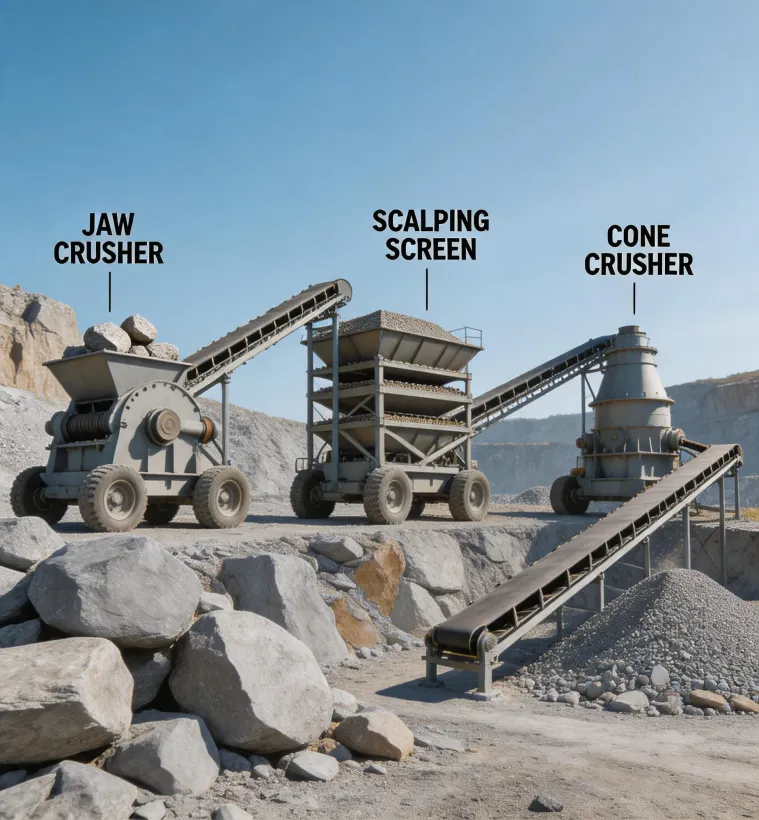
Crushing and screening without excess noise
Trio supports operators who need practical crushing and screening decisions rather than a complicated catalog tour. We focus on feed size, abrasiveness, capacity target, transport limits, maintenance access, and spare availability so each recommendation can be checked quickly by site teams.
The result is a compact path from duty review to quote: a jaw, cone, impact, screen, feeder, or wear-part scope that fits the plant layout and gives procurement a clean basis for comparison.
Key features
This block follows the required icon-list pattern. Each row is short enough for a buyer to scan, but specific enough for maintenance and plant engineering to know what Trio will ask before recommending equipment.
Equipment review begins with material size, clay content, moisture, wear profile, and daily tonnage so the crusher and screen combination is tied to actual feed behavior.
We check footprint, conveyor interfaces, support steel, service walkways, and lifting clearances before a proposal becomes a layout problem for the site crew.
Wear liners, screen media, bearings, belts, and critical spare kits are discussed with the machine scope, keeping uptime support visible from the first inquiry.
Clarifications stay concise. Trio asks for the few inputs that change the decision, then returns a practical next step instead of a long qualification loop.
Product grid
The manifest fixes this as product_grid/list_view, so every offer appears as a horizontal equipment row with image, description, quick spec notes, and a direct inquiry action.
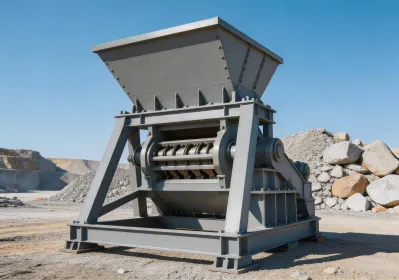
Built for hard feed, predictable nip angle, serviceable jaw access, and straightforward parts planning at the front end of the plant.
Typical fit: blasted rock, recycled aggregate, ROM ore, or quarry feed.
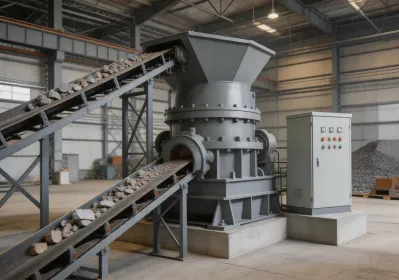
Matched to closed-side setting targets, liner change strategy, product shape needs, and the downstream screen load that determines true circuit capacity.
Typical fit: aggregates, hard rock mining, ballast, industrial minerals.
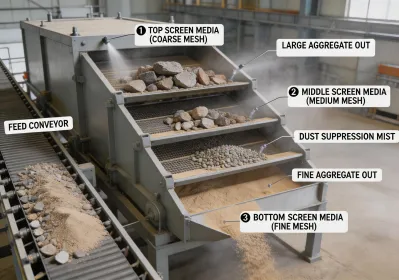
Selected around aperture, deck angle, stroke, water use, and media change requirements so separation performance does not become a hidden bottleneck.
Typical fit: scalping, sizing, washing support, final product screening.
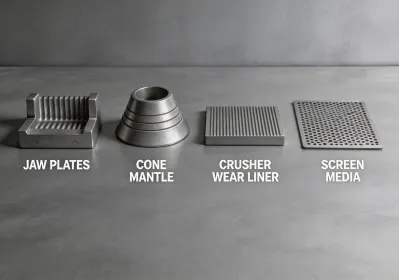
Wear items are mapped to material abrasiveness, maintenance windows, and available lifting methods so replacement planning is practical, not theoretical.
Typical fit: liners, jaw plates, mantles, side plates, mesh, modular media.
Specs table
The grouped table format makes the required input visible. It is intentionally dense because Trio is built for operations that want a short path to a clear answer.
Company stats
Whether the request is for a replacement jaw crusher, a secondary cone station, a screen media review, or a spare strategy for an existing plant, we turn fragmented operating details into a focused equipment conversation.
Start an Equipment Review